Fragments of Presence
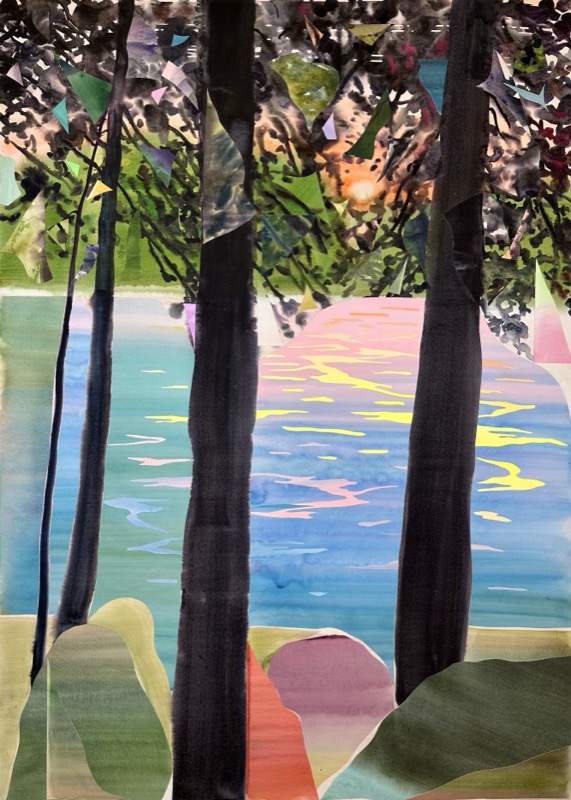
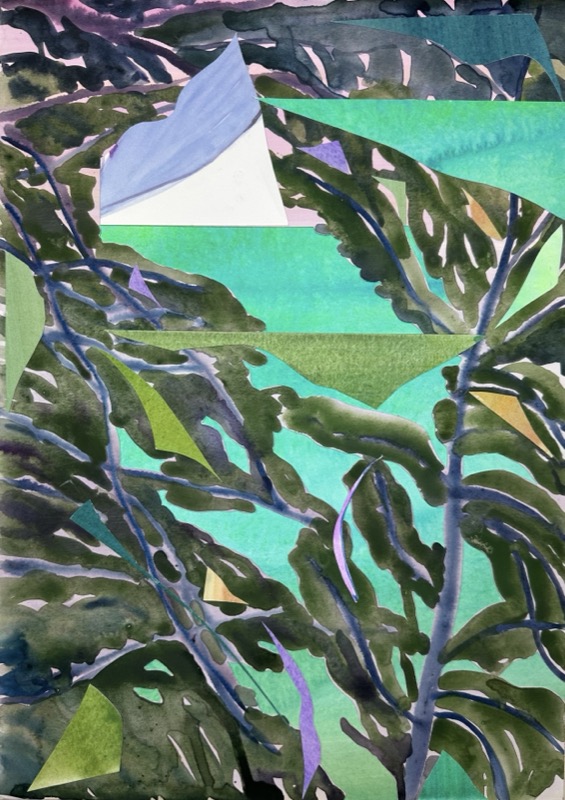
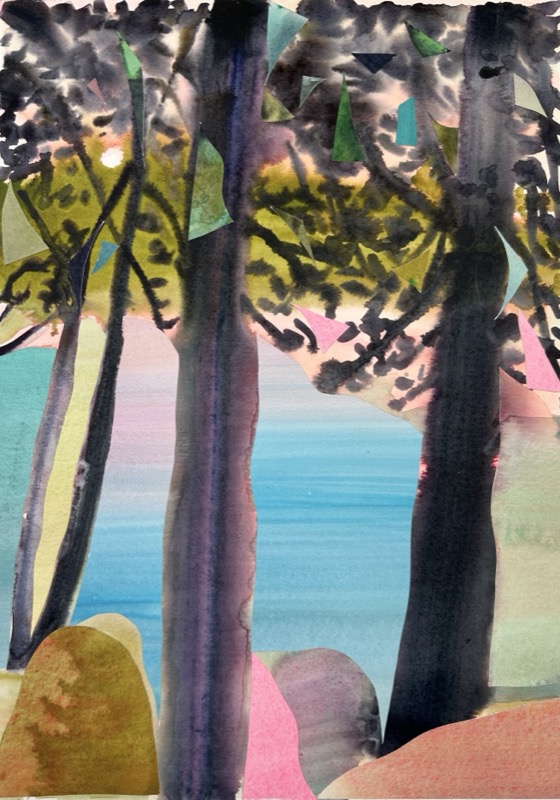
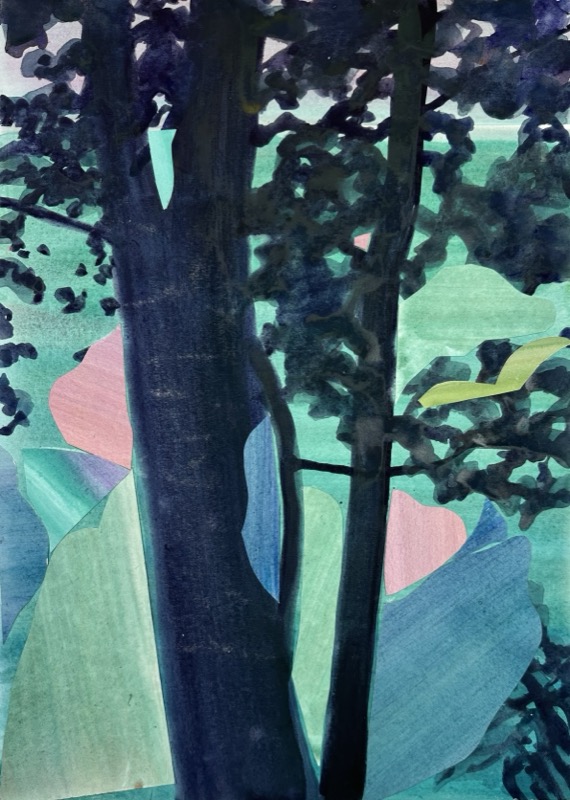
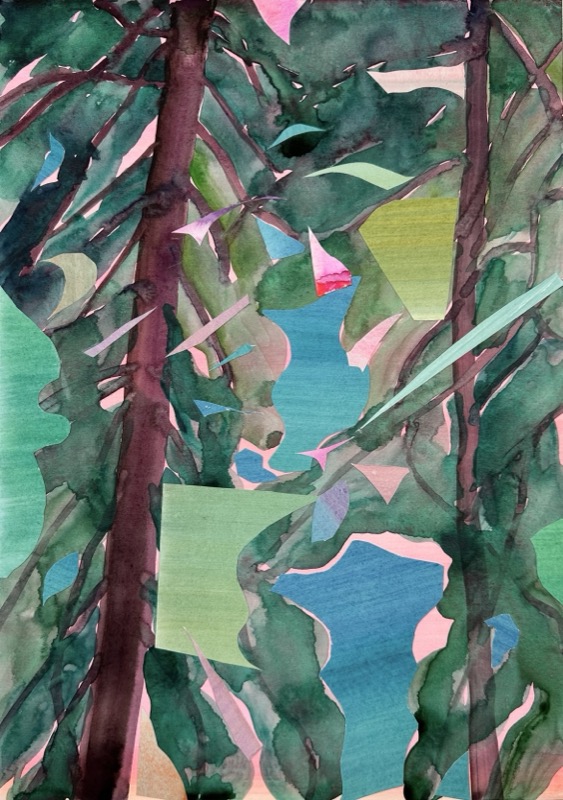
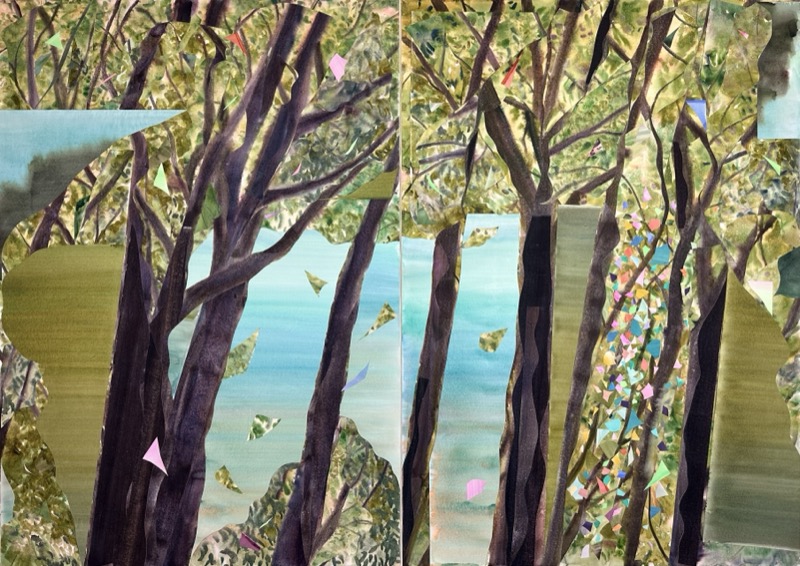
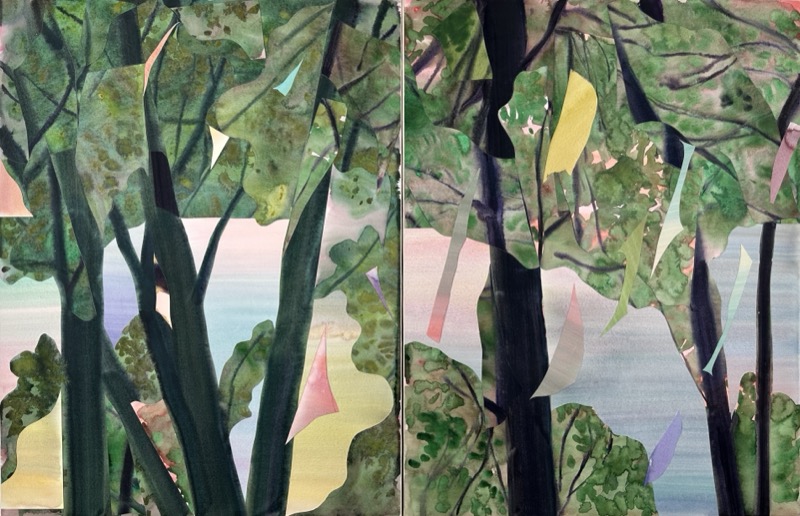
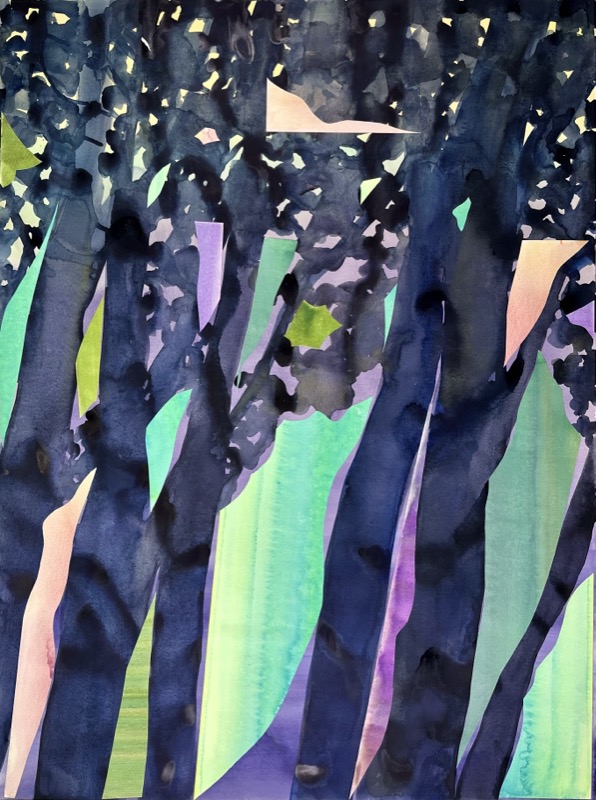
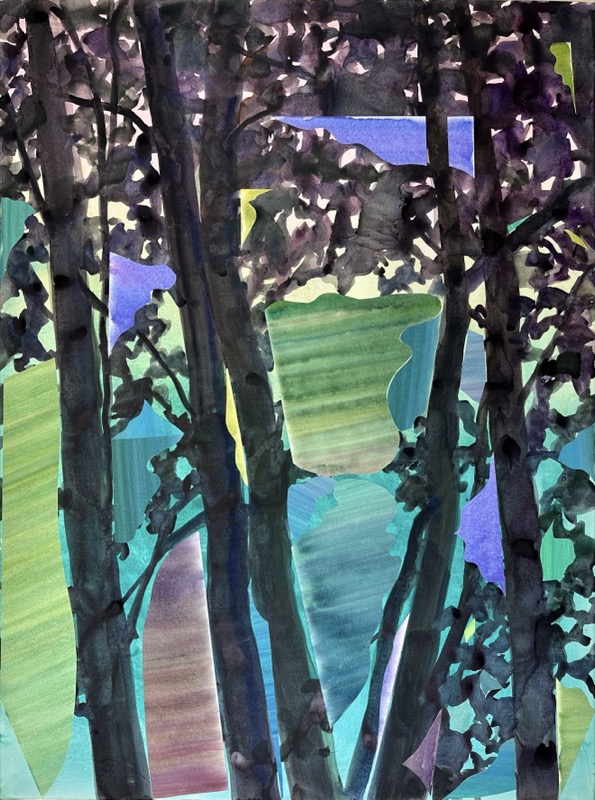
This body of work emerges from what I understand as fragmented time, small intervals hidden deep within a dark forest of everyday life. There, a path slowly ascends through shifting light and shadow, passing a stream and a lake. Just before reaching the summit, I catch sight of a distant, softened horizon through the gaps between leaves.
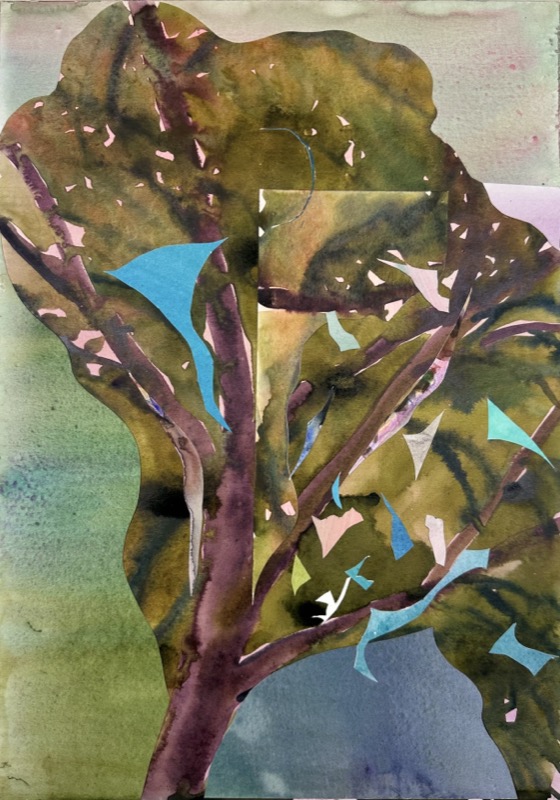
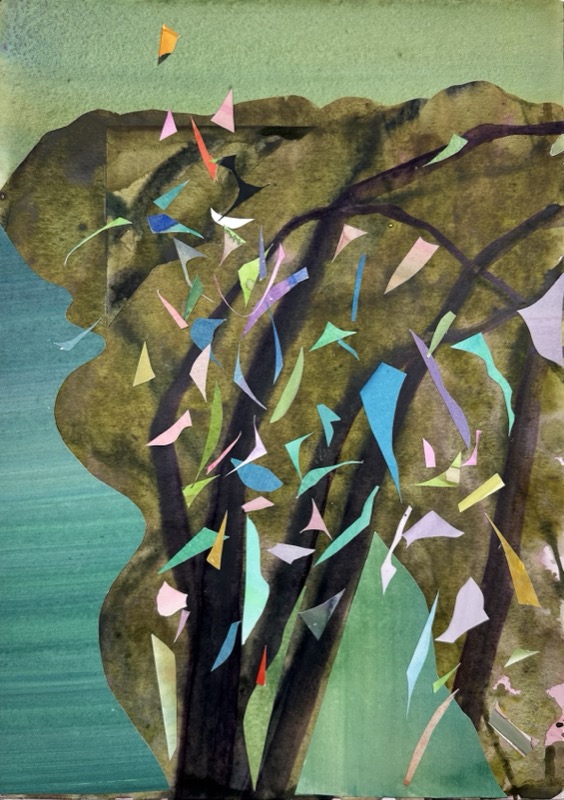
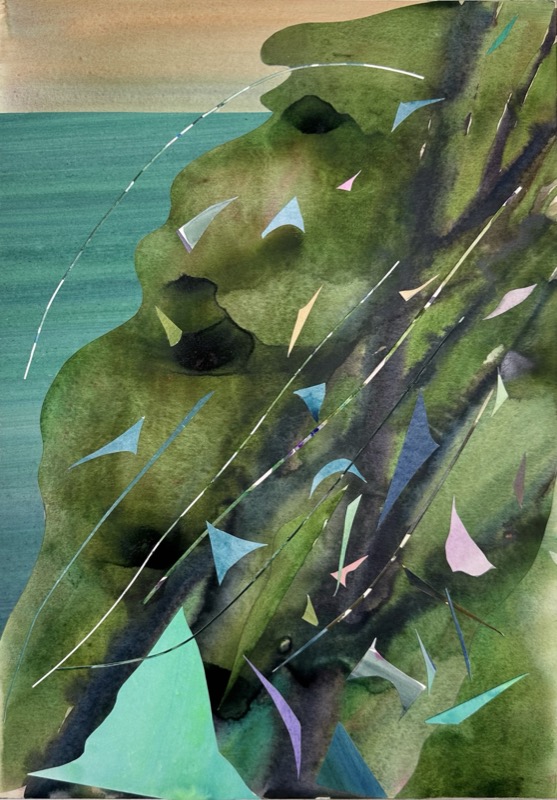
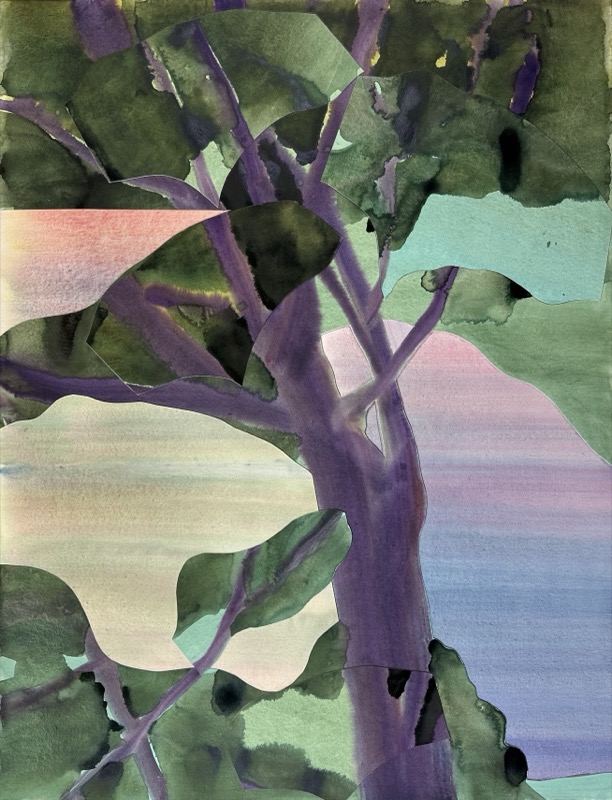
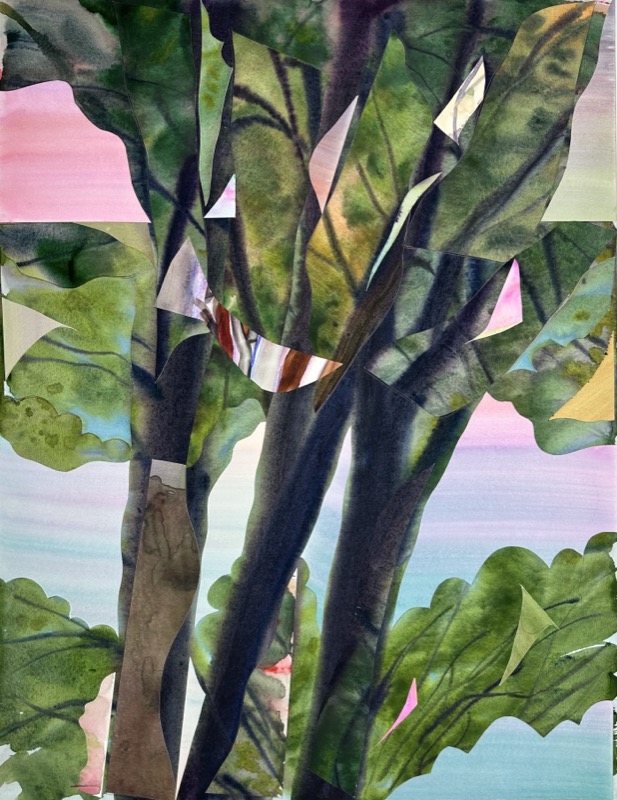
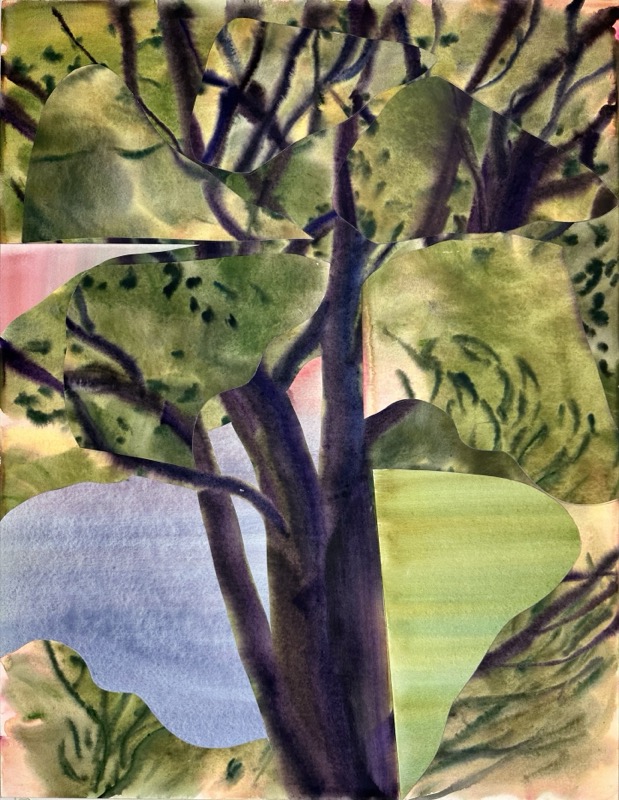
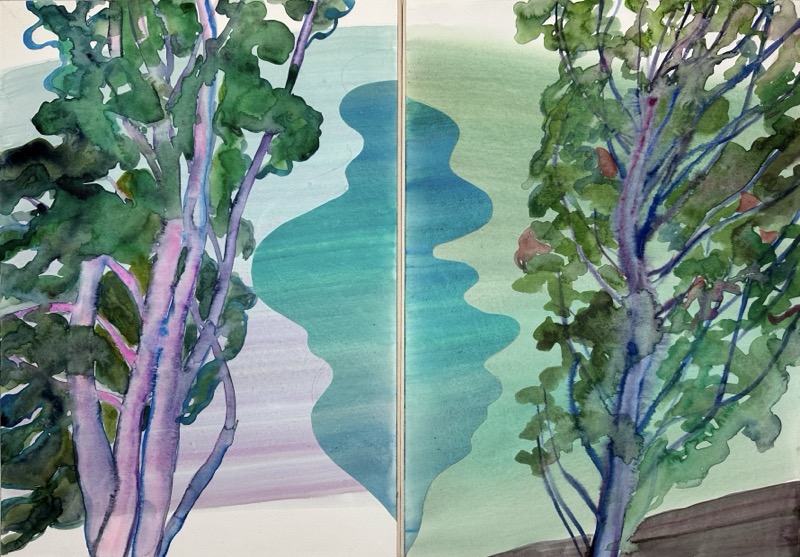
I paint forests, water, the spaces between foliage, and the light that filters through them. The image unfolds in layers, obscured, overlapping, and continuously shifting. Structures composed of fragmented pieces of paper gradually extend into a path leading toward an inner landscape. The process of making itself constitutes the work. Each piece undergoes cycles of painting, cutting, reassembling, and repainting. The image emerges through interruption, intersection, and accumulation rather than through continuous construction. Fragments once discarded are reintroduced and given renewed presence. The surface develops through layering and displacement, much like time itself, discontinuous, interrupted, and constantly reconfigured. In this condition, time is no longer a single linear progression, but a field composed of dispersed moments.
As Gaston Bachelard writes in L’Intuition de l’instant: “Time has only one reality, that of the instant. In other words, time is a reality concentrated in the present instant and suspended between two voids.”
Through the gaps in the forest, the act of looking toward distant water recurs. A fractured lake appears as an interrupted gaze shaped by the constraints of daily life and time. Water becomes a soft center within the work. It holds depth and fluidity, at times still, at times veiled, unsettling vision as it moves between clarity and obscurity, transparency and concealment. It never fully reveals itself, appearing only briefly through shifting perspectives and partial views. The lake both reflects and carries traces of presence, memory, and what remains unrealized, intertwined with a sense of feminine vitality and emotional flow.
This is closely intertwined with my experience of becoming a mother. A shift in the conditions of daily life has led to a different understanding of time. Time is no longer continuous, but fragmented and incomplete, perceptible only within brief intervals. It is within pauses, between actions, and after responsibilities that I encounter myself again. In these moments, perception sharpens, and within limited and fragmented time, a new rhythm of making gradually takes form.
I work primarily with watercolor on paper, combined with cutting and collage, allowing painting to continue through interruption and reconfiguration. For me, watercolor is not merely a light medium in form. Its fluidity, transparency, and immediacy require me to respond to the image in each passing moment. Collage, in turn, allows interrupted fragments to be rearranged, forming new connections within rupture. The layering of paper becomes a sedimentation of time. In the works of J. M. W. Turner, form dissolves into light and atmosphere, allowing the image to drift between appearance and disappearance. In my work, this sense of movement is transformed into light passing through foliage and water broken into fragments. In Paul Klee, watercolor moves beyond the representation of nature and becomes a means of constructing inner space. In a similar way, the forests I paint extend through processes of deconstruction into paths toward an inner landscape. Through the influence of these two artists, I have come to understand that painting is not simply a depiction of the external world, but a process unfolding within light, time, and perception, both constrained and open. The image develops slowly within water and time. Each mark becomes an immediate decision. It is a brief breath, a moment of awakening.
These works do not move toward resolution or conclusion. Instead, they remain within a state of coexistence, where the return of the self through making intertwines with the fragmentation of everyday life. Doubt and recording coexist. Immersion, emergence, and looking recur. What I seek to attend to are those presences that flicker between concealment and appearance, never fully seen, yet persistently there. Some landscapes can only be perceived through the gaps between leaves. In the same way, I gradually emerge within fragmented time.